
Minister of Planning and Cairo University President Witness Signing of Cooperation Protocol to Enhance Collaboration in Governance, Administrative Reform, Entrepreneurship, and Capacity Building
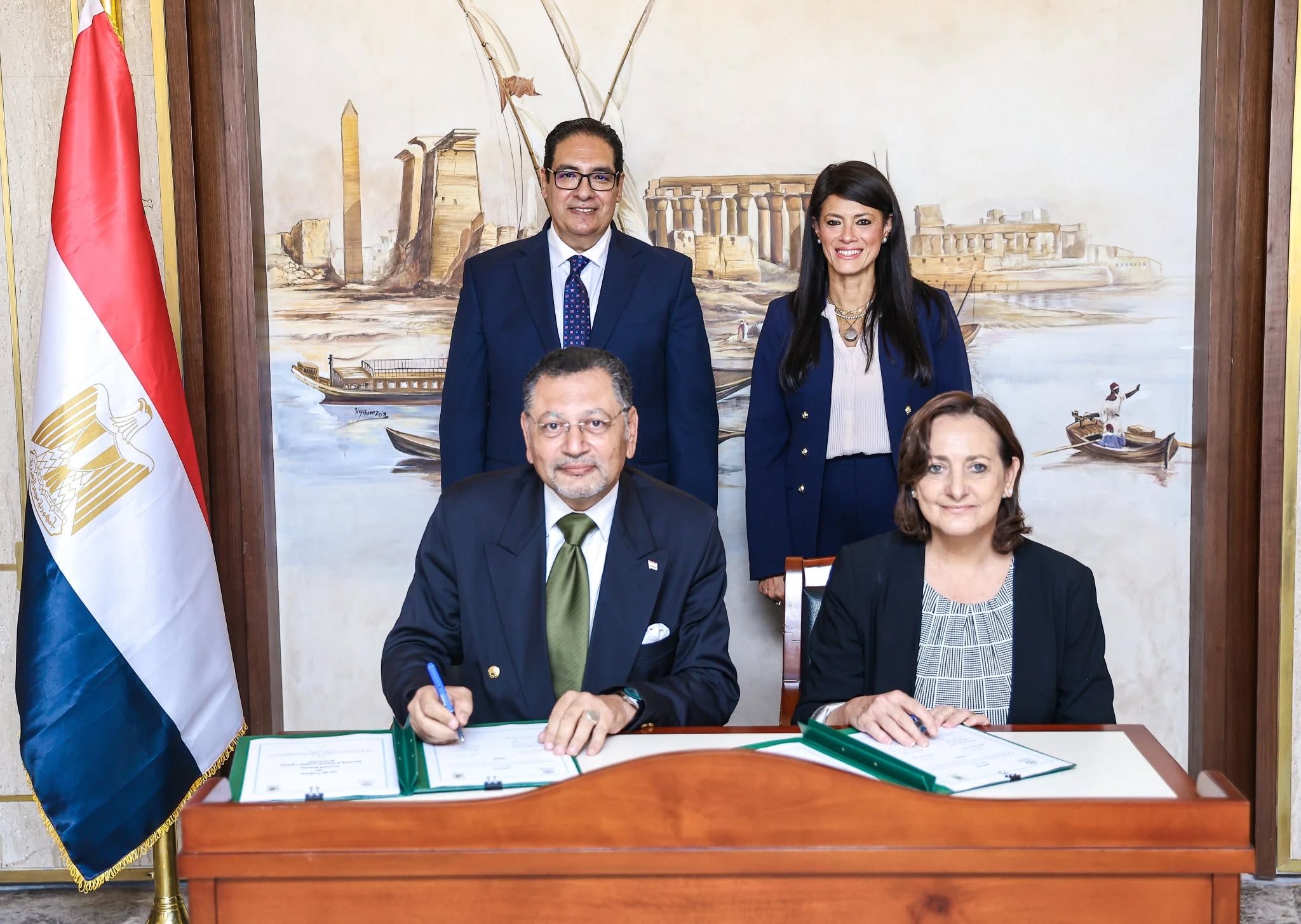
Dr. Rania Al-Mashat, Minister of Planning, Economic Development and International Cooperation and Chairperson of the Board of Trustees of the National Institute for Governance and Sustainable Development, along with Dr. Mohamed Sami Abdel-Sadek, President of Cairo University, attended the signing ceremony of a cooperation protocol between NIGSD and Cairo University. The agreement seeks to strengthen joint efforts in governance, administrative reform, sustainable development, entrepreneurship, academic research, and scientific activities.
The protocol was signed by Dr. Sherifa Sherif, Executive Director of NIGSD, and Dr. Mohamed Refaat El-Sirky, Vice President of Cairo University for Community Service and Environmental Development. The signing reflects the Ministry’s commitment to promoting institutional and academic partnerships that contribute to sustainable development and reinforce principles of good governance and sound management within Egypt’s educational and research institutions.
Dr. Al-Mashat emphasized that the agreement represents a model of institutional synergy among state entities in implementing the national sustainable development strategy through human capacity building, academic research support, and empowering youth and administrative leaders to manage resources efficiently. She noted that the protocol aligns with Egypt’s efforts to strengthen collaboration in governance, digital transformation, and entrepreneurship, contributing to inclusive economic and social development and the localization of sustainable development goals.
The Minister added that the protocol aims to implement a series of professional training programs for university students and administrative staff, as well as seminars and workshops tailored to their specializations. It also provides practical training opportunities to prepare students for the labor market. The agreement further outlines the development of governance frameworks and administrative systems for the university, focusing on effective implementation to support Egypt’s sustainable development strategy.
The collaboration will include restructuring and automating administrative operations, enhancing the quality of university services, and improving institutional competitiveness to achieve a qualitative leap in university performance. It also supports upgrading Cairo University’s digital infrastructure and adopting e-university programs.
For his part, Dr. Mohamed Sami Abdel-Sadek affirmed that the protocol comes within Cairo University’s commitment to strengthening national partnerships that promote administrative reform, governance, and capacity building. He highlighted that cooperation with NIGSD is a key step toward knowledge exchange and integration between academic and national institutions, helping to prepare cadres capable of applying governance principles and fostering a culture of sustainability across Egypt’s institutions.
Dr. Sherifa Sherif, Executive Director of NIGSD, stated that the coming period will see increased coordination between the two parties to implement the agreement through experience-sharing visits, exchange of trainers, experts, and researchers, and the development of joint training and research initiatives. She also emphasized the importance of digital connectivity for information exchange and distance learning programs.
Meanwhile, Dr. Mohamed Refaat El-Sirky, Vice President of Cairo University for Community Service and Environmental Development, noted that the partnership will help implement joint training and research projects aimed at building the capacities of youth, researchers, and academic leaders, and strengthening the application of sustainable development principles within and beyond the university. He affirmed that Cairo University remains committed to integrating sustainability concepts into its academic and research programs to support Egypt’s Vision 2030 and the transition toward more efficient and sustainable educational institutions.


See more


